
A Persian-Speaking Online Therapist for Iranians in New York & New Jersey
Life in New York and New Jersey keeps a punishing tempo: crowded trains, hard deadlines, rent, and a language you work in for hours a day — a language that nonetheless stops short of your deepest feelings. Right at that point, talking through grief, anxiety, or a relationship that has gone cold takes on a different color when it happens in the language you grew up with. Honar-e Hale Khoob Psychology Clinic, led by Dr. Mohsen Nazari, runs online counseling and psychotherapy sessions in Farsi for people living in New York and New Jersey. From Manhattan and Brooklyn to Fort Lee and Paramus, the distance between you and the therapy room is one screen.

Why therapy in your mother tongue shortens the road
Many of our clients in New York tell us their English is "perfectly fine" for work and school. Then they try to describe a childhood memory, the ache of missing their mother, or the fear of falling behind — and the words arrive late. Emotion rides on your first language. Translate "delam gerefte" — my heart is heavy — into English, and part of the meaning stays behind while you busy yourself translating instead of feeling.
In a session with a Farsi-speaking therapist, you never have to explain taarof, the weight of aberoo, or the pressure of "what will people say." Your therapist already shares that cultural ground. At Honar-e Hale Khoob Clinic, the treatment plan is built around your personal and cultural context, which is exactly what turns a session from a dry interview into the conversation you have been waiting years to have.
Meet Honar-e Hale Khoob Clinic
Honar-e Hale Khoob Psychology Clinic is directed by Dr. Mohsen Nazari, psychologist and psychotherapist, and its clinical team works with current evidence-based methods, including Cognitive Behavioral Therapy (CBT), Acceptance and Commitment Therapy (ACT), and Emotionally Focused Therapy (EFT). The clinic's scope runs from individual counseling and couples therapy to group sessions and treatment for anxiety, depression, OCD, chronic stress, and trauma. On its contact page, the clinic states plainly that it serves Iranians and Persian speakers worldwide — including residents of New York and New Jersey — through online sessions.

Getting started: from first contact to treatment plan
1. Contact and needs assessment
Send a short description of your situation through the clinic's contact page or its WhatsApp line. The coordination team asks whether your concern is mostly individual, relational, or family-related, and suggests where to begin.
2. Scheduling around the time difference
You pick a fixed slot that fits your daily rhythm. The next section of this page maps the most workable windows for you.
3. A private video session
Sessions run on a secure video platform. On your side, all it takes is a stable connection, a pair of headphones, and a quiet corner.
4. Treatment plan and follow-up
After the first sessions, goals and the path of work are written down together, and every so often you review how far you have come since the day you started.

Services for Persian speakers in New York & New Jersey
Individual therapy
Anxiety, depression, OCD, chronic stress, self-worth, and the questions migration raises — with CBT and ACT.
Couples therapy
Rebuilding trust, managing recurring conflict, and deepening the emotional bond, using the EFT approach.
Family therapy
For parents building a bridge between the culture at home and the culture of their child's American school.
Group sessions
Practicing social skills and easing isolation alongside people who carry similar experiences.
Teen mental health
Resilience for teenagers assembling an identity between two languages and two cultures.
Trauma & PTSD care
Processing painful experiences, from past events to the pressures of the migration journey itself.
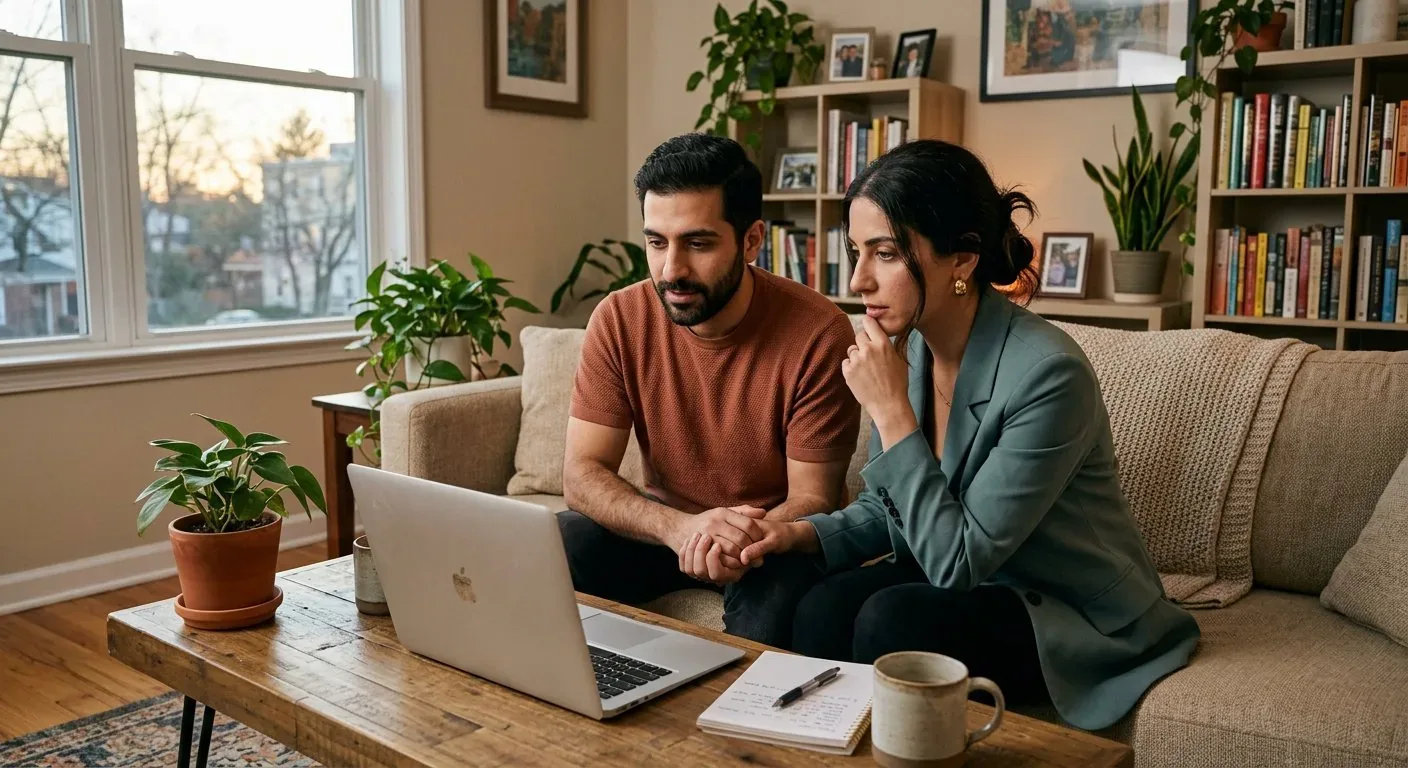
An in-person therapist in New York, or online sessions in Farsi? An honest comparison
The answer differs from person to person. Some need the physical presence of a therapy room; others need to be heard in their mother tongue. The table below gathers the trade-offs our Farsi-speaking clients describe most often, so you can weigh them against your own situation.
| Criterion | Farsi-speaking online psychologist (Honar-e Hale Khoob) | In-person English-speaking therapist in New York |
|---|---|---|
| Language of emotion and nuance | Full expression in your mother tongue | Feelings must be translated into a second language |
| Cultural context (taarof, family, migration) | Shared cultural ground | Time spent explaining and being understood |
| Cost per session | Usually lower | Typically higher in the metro area |
| Wait for a first appointment | Shorter | Weeks to months at busy practices |
| Commute | None | Manhattan traffic or the NJ Turnpike |
| U.S. insurance coverage | Usually not covered | Covered when in-network |
| Immediate in-person crisis intervention | Not possible | Possible |
Making the New York–Tehran time difference work
Tehran runs 8.5 hours ahead of New York in the first half of the calendar year and 9.5 hours ahead in the second. On paper that looks intimidating; in practice, two golden windows open up, and most of our U.S.-based clients settle into one of them:
| Your time in New York / New Jersey (EDT) | Tehran time | Fit with the clinic's day |
|---|---|---|
| 7–9 a.m., before work | 3:30–5:30 p.m. | Iranian afternoon; the easiest window to book |
| 12–2 p.m., lunch break | 8:30–10:30 p.m. | Iranian evening; good for shorter sessions |
| 8–10 p.m. | 4:30–6:30 a.m. next day | Iranian dawn; by prior arrangement only |
Add one hour to the Tehran column in the second half of the year. Many clients turn the pre-work morning slot into a fixed weekly habit — the regularity of the slot is itself part of the treatment.
Iranians in New York & New Jersey: a larger community than you think
Based on U.S. Census estimates, the New York–New Jersey metro area is home to one of the country's largest concentrations of people of Iranian ancestry, from Great Neck and Kings Point on Long Island to the towns of northern New Jersey. Much of this community lives between two worlds: a career built here, and a family and a set of memories that stayed on the other side of the ocean. Migration stress, missing aging parents, worry about residency status, and raising a child who grows up between two cultures rank among the most frequent topics in our online sessions with Persian speakers in America.
Before you begin: what we keep transparent
Trust is built when no question goes unanswered. Put these four items on the table before your first session:
Four transparency points
- The location rule: in the United States, a psychotherapy session is legally considered to take place in the state where you are physically located during the session — a session held from New York falls under New York's rules, and each state's rules about out-of-state providers differ. If you plan to use insurance or need formal documentation, ask the clinic and your state licensing board about your specific situation. Knowing this does not reduce the value of culturally attuned care; you simply have the right to start with open eyes.
- Crisis situations: online psychotherapy does not replace emergency services. If you or someone close to you is in immediate danger, or thoughts of self-harm have become concrete, call or text 988 (U.S. Suicide & Crisis Lifeline); for danger to life, call 911.
- Payment: given the banking restrictions between the two countries, settle the payment method before your first session so administrative friction never stacks on top of treatment.
- Connection drops: keep a backup plan — a phone hotspot, or continuing the session as a phone call. Continuity of sessions is continuity of psychological safety.
Your first-session checklist
- A quiet spot with a closed door. If your New York apartment has no such corner, a parked car has served many of our clients well.
- Headphones instead of a speaker — for privacy and for sound quality alike.
- Write down what you want to say; first-session nerves have a way of erasing topics.
- Your questions about confidentiality, the no-recording default, and the cancellation policy.
- A realistic expectation: session one is for getting acquainted and assessment, not for resolving a decade of grief.
Common mistakes when starting online therapy
- Choosing a therapist by price or a flashy ad, without asking about education, licensure, and clinical approach.
- Joining from the kitchen or the living room while family members come and go; privacy is the playing field of honest talk.
- Expecting an overnight transformation after two sessions; deep change takes time and practice between sessions.
- Hiding medication, previous treatment, or crisis moments from your therapist; the fuller the information, the sharper the plan.
- Rescheduling over small pretexts; irregularity is the most common silent killer of the treatment process.
Starting therapy is not a sign of weakness. It is the bravest decision many people ever make.
Frequently asked questions
Is online psychotherapy really as effective as in-person sessions?
For many common concerns — anxiety, depression, relationship stress — video sessions with a clear treatment plan and a stable connection produce outcomes close to in-person care. What decides the result is the quality of the therapeutic relationship and the plan itself, not the wall between you and your therapist.
Can we do couples therapy online if my partner and I live in different cities?
Yes. In split-screen sessions each partner joins from their own location, and sometimes that distance lowers the tension of a face-to-face argument and lets each person hear the other more calmly.
My English is stronger than my Farsi. Will that be a problem in session?
No. Many second-generation clients switch between the two languages mid-session, and the therapist follows along — work terms in English, feelings in Farsi. Your freedom to express yourself is what matters.
How do I pay for sessions from the United States?
Given the banking restrictions between the two countries, the clinic's coordination team walks you through the current payment options before your first session, so logistics never sit on top of your treatment.
Will my information and sessions stay confidential?
Confidentiality is the bedrock of the profession. Sessions are not recorded by default and your file is accessible only to the treatment team. If you have a specific concern — a shared family device, for example — tell the coordinator before your session.
What if I feel worse between sessions?
Each session ends with a plan for the time between sessions, and in a crisis the U.S. 988 Suicide & Crisis Lifeline (call or text 988) is available. Online therapy is not a replacement for emergency services.
A final word
If you are far from home in New York or New Jersey, carrying the weight of anxiety, grief, or a worn-out relationship on your shoulders, you do not have to carry it alone. The team at Honar-e Hale Khoob Psychology Clinic, under the supervision of Dr. Mohsen Nazari, is a place where you can speak in your own language, be heard, and grow lighter step by step. The first contact is the shortest bridge between the you of today and the day you feel well again.
Start the conversation right here
The Honar-e Hale Khoob coordination team answers your questions and books online appointments on New York and New Jersey hours.